No initial required
She will not be Saelira B. There is no realistic chance of a second Saelira in the room, the year group, or most likely the town.
A girl's name · European origin
say‑LEER‑uh /seɪˈlɪərə/
“pearl of the sea”
A name drawn from the Anglo-Saxon word for the sea and the Latin word for the long furrow a ship leaves behind it. Soft enough to whisper, formal enough to sign — and, in 2026, almost certainly the only one in her class.
The meaning
Saelira joins a Germanic root to a Latin one — the same marriage of northern and southern Europe that produced most of the names on any modern birth certificate.
the sea; also Old Norse sær
a furrow; a raised ridge
Read strictly, the two elements give furrow of the sea: the long bright line a hull draws across open water, or the curl of a single wave. Anglo-Saxon and Norse poets built exactly these compounds — they called the ocean the whale-road and the swan's path, and a ship the sea-steed. Saelira sits comfortably inside that tradition.
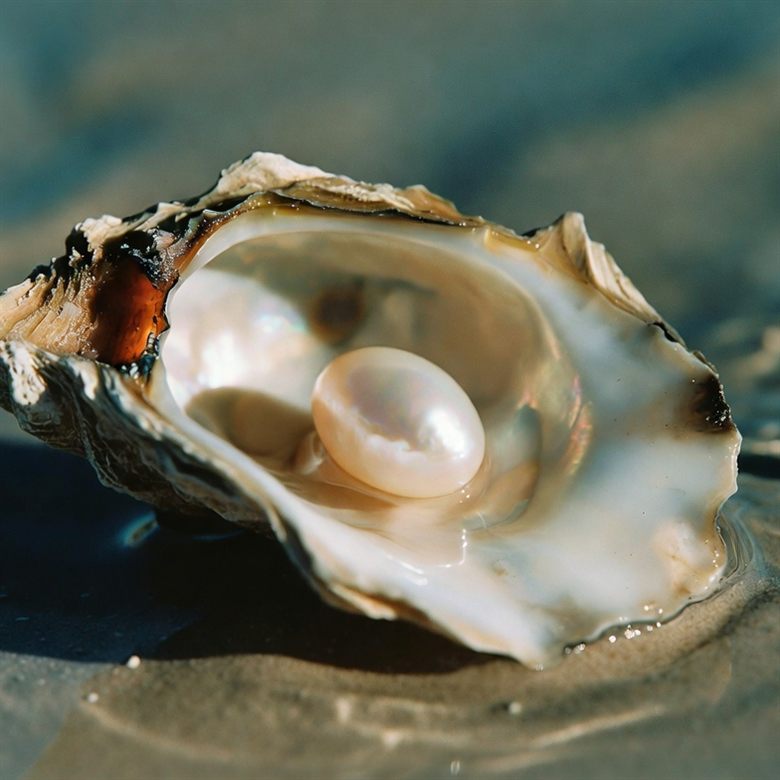
In everyday use the name is carried with the warmer, plainer sense that parents actually say out loud: pearl of the sea. A second reading takes the ending instead from Latin lyra and Greek λύρα, the lyre, giving song of the sea.
Why now
For thirty years the top of the girls' charts has been a handful of names shared by everyone. Saelira gives a daughter the opposite: something that sounds entirely familiar and is nonetheless hers.
She will not be Saelira B. There is no realistic chance of a second Saelira in the room, the year group, or most likely the town.
It shares its music with Elira, Saoirse, Lyra and Amira — names people already know. Nobody has to ask you to repeat it twice.
Saying it
Everything about the name
Element by element: sǣ, sær, lira, lyra — and the Anglo-Saxon names that carry the same first syllable.
Read the etymology →IPA, syllable breakdown, the two common mispronunciations, and how the name lands in French, German, Italian and Spanish.
Learn to say it →What the official registers actually show, why absence from them is the strongest argument for the name, and how rarity ages.
See the numbers →Sae, Lira, Leira, Ellie, Sisi — short forms for the playground, the classroom and the boardroom.
Browse nicknames →Sixty tested pairings, sorted by rhythm — one-syllable anchors, classic two-beat names, and family-honour options.
Find the pairing →Sisters and brothers that sit beside Saelira without shouting over it — or disappearing next to it.
Build the sibset →Elira, Saoirse, Lyra, Amira, Marisol, Elvira. What each one gives you that Saelira does not.
Compare names →Saelira, Sælira, Saelyra, Sailira, Selira. Why the plain spelling is the one worth keeping.
Compare spellings →Still deciding
Saelira came from somewhere. If you are still gathering candidates, these are the fuller lists it belongs to — with meanings and origins for every name.
Rare names that are still easy to say and spell — and the four tests a distinctive name has to pass before it is fair to a child.
Browse the list →Ninety girls' names drawn from the water, with their real etymologies — plus the Old English sea-kennings behind them.
Browse the list →The vast Margaret family and the rarer routes to the same jewel, from Greek margarites to Persian gohar.
Browse the list →The impression it makes
The practical test of a girl's name is whether it survives every stage of a life. It has to fit a birth announcement, a lunchbox, a university application, a byline and a nameplate — and it has to do so without ever sounding like a costume.
Saelira passes because its parts are ordinary. The opening say is one of the most common sounds in English. The stressed LEER is shared with Delira, Elira and Amira. The closing -a is the standard feminine ending across Europe, from Sofia to Clara to Anna. Nothing in the name is exotic; only the combination is new.
Rarity without strangeness is the hardest thing to find in a name — and the only kind worth having.
That is also why it ages well. Names that feel invented tend to be built from unusual sounds. Saelira is built from usual sounds in an unusual order, which is precisely how Amelia, Isla and Aria arrived — familiar material, freshly arranged. In thirty years it will read as a name, not as a year.
Questions
Saelira is borne with the intended meaning “pearl of the sea.” Its literal elements are Old English sǣ (“sea”) and Latin lira (“furrow, ridge”), which read together as “furrow of the sea” — a poetic figure for a wave crest or the wake behind a ship. Full etymology →
say-LEER-uh, written /seɪˈlɪərə/. Three syllables, stress on the second. The ae is a single sound — “say,” not “sah-eh.” Pronunciation guide →
Yes — it is a modern given name assembled from genuine historical elements. The Anglo-Saxon sǣ is well attested in recorded names such as Sæwine and Sæberht; lira is ordinary classical Latin.
Saelira is a contemporary coinage rather than a medieval survival, and that is unremarkable. Jessica, Vanessa, Wendy, Miranda, Pamela and Lorna were all invented by writers before they became names on school registers. Every name was new once.
It is exceptionally rare. Saelira does not appear in the published United States Social Security Administration data, which lists every name given to five or more babies of the same sex in a year — so fewer than five American girls a year receive it. It is likewise absent from the published registers for England and Wales, Ireland, the Netherlands and the Nordic countries. The rarity data →
Sae and Sai for a crisp one-syllable call name; Lira, Leira and Lirah from the stressed middle; Ellie, Elle and Sisi as softer family options. All nicknames →
Its roots are entirely European. The first element belongs to the Germanic branch — Old English sǣ and Old Norse sær, the ancestors of modern English sea, German See, Dutch zee and Swedish sjö. The second belongs to Latin, the parent of Italian, Spanish, French, Portuguese and Romanian. The name reads naturally in all of them.
Because Saelira is three syllables with a middle stress, it is steadied best by a short, firm middle name: Saelira Wren, Saelira Maeve, Saelira Claire, Saelira June. Two-syllable classics also work well — Saelira Rose, Saelira Marie. Sixty pairings →
For a parent who wants a name that is distinctive without being a burden, Saelira is a strong choice. It is genuinely rare — below every national register's reporting threshold — yet built entirely from ordinary English sounds in the commonest rhythm in English girls' names, so it is easy to say, easy to spell, and ages without dating. It carries a warm meaning, “pearl of the sea,” and shortens naturally to Sae or Lira. Why its rarity is the point →
Saelira
Old English for the sea. Latin for the line drawn across it. Said the way it looks, and given to almost no one.